

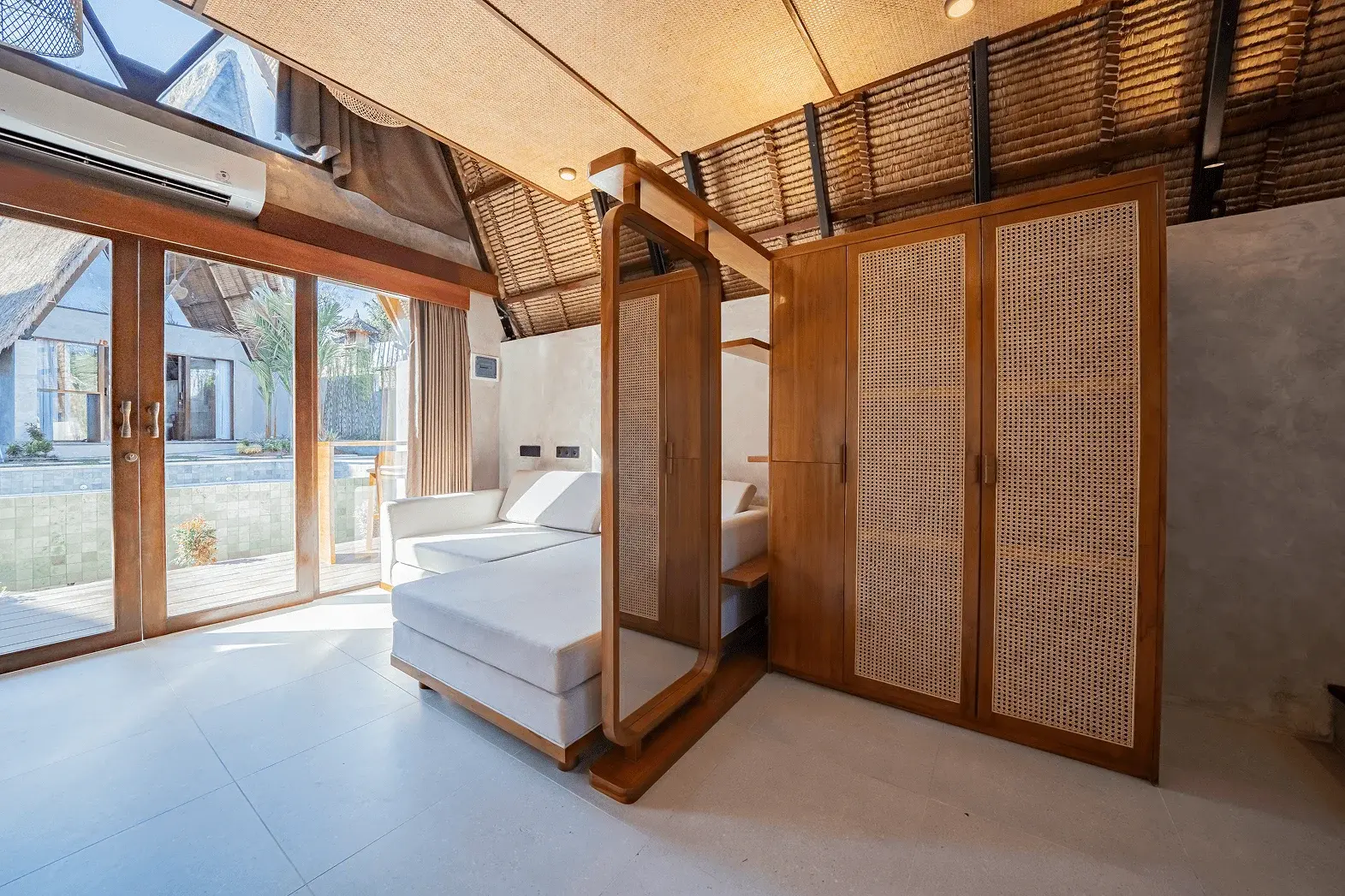
Foreigners can invest in Bali real estate, but the structure matters more than the villa itself. A beautiful property in the wrong legal structure, in the wrong location, or without professional management can become a complicated asset. A smaller, well-managed property with clear documentation, realistic income assumptions and a strong operator can be a better investment than a larger villa sold mainly through renderings.
For most international buyers, the practical routes are leasehold, a right-to-use structure, or a company-based investment structure. The right option depends on the investor’s residency status, intended use, budget, tax position, holding period and appetite for operational involvement. The main rule is simple: do not evaluate Bali property only by design and projected returns. Evaluate the land rights, zoning, permits, developer track record, construction quality, operating model and exit logic.
For most international buyers, the practical routes are leasehold, a right-to-use structure, or a company-based investment structure. The right option depends on the investor’s residency status, intended use, budget, tax position, holding period and appetite for operational involvement. The main rule is simple: do not evaluate Bali property only by design and projected returns. Evaluate the land rights, zoning, permits, developer track record, construction quality, operating model and exit logic.
Why Bali attracts international real estate investors
Bali is not just a lifestyle destination. It is one of Asia’s most recognizable hospitality markets, with a global audience that includes Australians, Europeans, Americans, Middle Eastern travelers, digital workers, wellness tourists and long-stay guests. That mix creates demand for short-term rentals, boutique hotels, managed villas and lifestyle-driven real estate.
The investment logic is easy to understand: global tourism demand meets limited prime land in the island’s most desirable areas. In markets such as Uluwatu, Canggu, Seminyak, Pererenan, Bingin and parts of the Bukit Peninsula, the value of a property is not only the building. It is also the location, guest demand, access, operational quality and scarcity of land that can still be developed into a professionally managed hospitality product.
But this is exactly where investors make mistakes. They see Bali as a simple villa market, when in reality it behaves like a hybrid of tourism, construction, land law, hospitality operations and international capital flows. A villa can be a lifestyle asset, a rental asset, a hotel unit, a development play or a resale asset. Each version has a different risk profile.
The investment logic is easy to understand: global tourism demand meets limited prime land in the island’s most desirable areas. In markets such as Uluwatu, Canggu, Seminyak, Pererenan, Bingin and parts of the Bukit Peninsula, the value of a property is not only the building. It is also the location, guest demand, access, operational quality and scarcity of land that can still be developed into a professionally managed hospitality product.
But this is exactly where investors make mistakes. They see Bali as a simple villa market, when in reality it behaves like a hybrid of tourism, construction, land law, hospitality operations and international capital flows. A villa can be a lifestyle asset, a rental asset, a hotel unit, a development play or a resale asset. Each version has a different risk profile.
The first question is not “Which villa should I buy?”
The first question should be: “What am I actually buying, and how will this asset produce value?”
Many foreign buyers start with surface-level criteria: ocean proximity, pool size, bedroom count, interior style, price per square meter and projected ROI. These points matter, but they come later. Before comparing villas, an investor needs to understand the ownership structure, the permitted use of the land, the construction status, the operator’s role and the realistic source of income.
In Bali, a property that looks excellent in a presentation can still be weak as an investment if the land rights are unclear, the permits are incomplete, the access road is problematic, the building quality is poor, or the income forecast assumes occupancy that the property has no operational system to achieve.
Many foreign buyers start with surface-level criteria: ocean proximity, pool size, bedroom count, interior style, price per square meter and projected ROI. These points matter, but they come later. Before comparing villas, an investor needs to understand the ownership structure, the permitted use of the land, the construction status, the operator’s role and the realistic source of income.
In Bali, a property that looks excellent in a presentation can still be weak as an investment if the land rights are unclear, the permits are incomplete, the access road is problematic, the building quality is poor, or the income forecast assumes occupancy that the property has no operational system to achieve.
Understanding the basic ownership structures
Foreign buyers cannot treat Indonesian real estate in the same way they treat property in the United States, Europe or Australia. Indonesia has its own land rights system. The most important point is that freehold land ownership in an individual foreign name is not the standard legal route. Foreign investors usually work through leasehold, right-to-use arrangements or company structures, depending on the asset and purpose.
The terminology can feel technical, but the investment logic is straightforward. The structure should match the investor’s plan: passive rental income, future resale, lifestyle use, corporate investment, or a larger development strategy.
The terminology can feel technical, but the investment logic is straightforward. The structure should match the investor’s plan: passive rental income, future resale, lifestyle use, corporate investment, or a larger development strategy.
Leasehold is common, but the details matter
Leasehold is often the most accessible way for a foreign investor to enter the Bali property market. In simple terms, the investor receives the right to use the property for a defined period. The commercial value of the asset depends on the length of the lease, the renewal terms, the quality of the contract, the landowner relationship, the notarial documentation and the resale potential.
A 25-year leasehold asset with a clear extension mechanism, a strong location and professional management can be more attractive than a longer but poorly structured deal. Investors should not look only at the headline lease length. They should examine what happens at renewal, how the extension price is calculated, whether the right can be transferred, what happens if the landowner changes, and whether the agreement is properly documented.
The commercial question is not just “How many years do I get?” The better question is: “Can this property generate enough income, appreciation and resale value during the lease term to justify the investment?”
A 25-year leasehold asset with a clear extension mechanism, a strong location and professional management can be more attractive than a longer but poorly structured deal. Investors should not look only at the headline lease length. They should examine what happens at renewal, how the extension price is calculated, whether the right can be transferred, what happens if the landowner changes, and whether the agreement is properly documented.
The commercial question is not just “How many years do I get?” The better question is: “Can this property generate enough income, appreciation and resale value during the lease term to justify the investment?”
Due diligence: the part investors cannot skip
The safest Bali property decisions are rarely the fastest ones. Due diligence is the process that separates a real investment from an emotional purchase. It should cover the land, the building, the developer, the operator and the financial model.
For off-plan projects, due diligence becomes even more important because the investor is not buying a finished asset. They are buying a future asset, a construction promise and an operating plan. That means the developer’s discipline matters as much as the design of the villa.
For off-plan projects, due diligence becomes even more important because the investor is not buying a finished asset. They are buying a future asset, a construction promise and an operating plan. That means the developer’s discipline matters as much as the design of the villa.
ROI in Bali: do not confuse gross revenue with investor profit
Projected returns are one of the strongest selling points in Bali real estate, but they are also one of the easiest areas to manipulate. A serious investor should always ask how the number is calculated. Is the return based on gross booking revenue? Net operating income? Owner profit after fees and taxes? Is it based on peak season performance or annual average occupancy?
A realistic financial model should include the daily rental rate, occupancy, seasonality, OTA commissions, management fee, cleaning, staff, utilities, repairs, tax, insurance, replacement of furniture and a reserve for unexpected maintenance. Without these items, ROI is not an investment number. It is a marketing number.
The right model should show at least three scenarios: conservative, realistic and optimistic. The conservative scenario matters most because it shows whether the investment still makes sense if the market is weaker, competition increases or occupancy is lower than expected.
A realistic financial model should include the daily rental rate, occupancy, seasonality, OTA commissions, management fee, cleaning, staff, utilities, repairs, tax, insurance, replacement of furniture and a reserve for unexpected maintenance. Without these items, ROI is not an investment number. It is a marketing number.
The right model should show at least three scenarios: conservative, realistic and optimistic. The conservative scenario matters most because it shows whether the investment still makes sense if the market is weaker, competition increases or occupancy is lower than expected.
Location: why Uluwatu needs a different lens
Uluwatu is not Canggu, and that is precisely why investors look at it differently. Canggu is more mature, more crowded and more saturated with villas, cafes and traffic pressure. Uluwatu is still associated with beaches, cliffs, surf culture, premium hospitality, wellness, retreats and a more spacious lifestyle image.
For investors, this creates a specific opportunity. Uluwatu can attract guests who do not want the density of Canggu but still expect high-quality accommodation, design, service and access to beaches, restaurants and lifestyle infrastructure. The challenge is that Uluwatu is not uniform. A property’s performance depends heavily on micro-location: road access, distance to key beaches, surrounding infrastructure, noise, views, development limits and future supply nearby.
A strong Uluwatu investment should not rely only on “the area is growing.” It should explain why the specific plot, format and operating model are positioned to capture that growth.
For investors, this creates a specific opportunity. Uluwatu can attract guests who do not want the density of Canggu but still expect high-quality accommodation, design, service and access to beaches, restaurants and lifestyle infrastructure. The challenge is that Uluwatu is not uniform. A property’s performance depends heavily on micro-location: road access, distance to key beaches, surrounding infrastructure, noise, views, development limits and future supply nearby.
A strong Uluwatu investment should not rely only on “the area is growing.” It should explain why the specific plot, format and operating model are positioned to capture that growth.
The management model can decide the investment outcome
A foreign investor may buy the same type of villa in the same area as another investor and still get a completely different result. The difference often comes from management. In hospitality real estate, the operator is not an afterthought. The operator is part of the asset.
Professional management affects pricing, occupancy, guest reviews, repeat bookings, maintenance, staff discipline, OTA visibility and the condition of the property over time. Poor management can turn a good building into an underperforming asset. Strong management can protect both income and resale value.
This is one reason hotel-style villa complexes can be attractive to investors who want exposure to Bali real estate without becoming involved in daily operations. Instead of managing guests, cleaners, pool maintenance, reviews and repairs personally, the investor participates in a hospitality model where the operator runs the asset as a business.
Professional management affects pricing, occupancy, guest reviews, repeat bookings, maintenance, staff discipline, OTA visibility and the condition of the property over time. Poor management can turn a good building into an underperforming asset. Strong management can protect both income and resale value.
This is one reason hotel-style villa complexes can be attractive to investors who want exposure to Bali real estate without becoming involved in daily operations. Instead of managing guests, cleaners, pool maintenance, reviews and repairs personally, the investor participates in a hospitality model where the operator runs the asset as a business.
How Nature Investment Group approaches this category
The investment angle behind Desa Harmonis II is not simply “buy a villa in Bali.” It is closer to a hotel-style villa investment: private villa units inside a managed hospitality environment, supported by architecture, construction, operations and guest service within one integrated system.
That distinction matters. A standalone villa owner must solve multiple problems separately: construction, furnishing, guest acquisition, cleaning, pricing, maintenance, staff, guest communication and reporting. In a managed hotel-style model, these functions are designed as part of the project from the beginning.
For investors, the key question is not whether Bali is attractive in general. The key question is whether a specific project has the legal, construction and management architecture to turn Bali demand into stable property income.
That distinction matters. A standalone villa owner must solve multiple problems separately: construction, furnishing, guest acquisition, cleaning, pricing, maintenance, staff, guest communication and reporting. In a managed hotel-style model, these functions are designed as part of the project from the beginning.
For investors, the key question is not whether Bali is attractive in general. The key question is whether a specific project has the legal, construction and management architecture to turn Bali demand into stable property income.
Investor checklist before buying Bali property
1. Confirm the legal structure and make sure it matches your investment goal.
2. Review the land documentation, lease terms, extension rights and transfer rights.
3. Check zoning, access, building permits and operational requirements.
4. Ask for a full financial model with realistic expense assumptions.
5. Review the developer’s completed work and construction process.
6. Understand who will manage the property after handover.
7. Check how guest acquisition will work: OTA platforms, direct bookings, marketing and review management.
8. Ask what happens in low season, during repairs and during unexpected market changes.
9. Clarify tax, reporting and payout mechanics.
10. Define your exit strategy before you buy.
2. Review the land documentation, lease terms, extension rights and transfer rights.
3. Check zoning, access, building permits and operational requirements.
4. Ask for a full financial model with realistic expense assumptions.
5. Review the developer’s completed work and construction process.
6. Understand who will manage the property after handover.
7. Check how guest acquisition will work: OTA platforms, direct bookings, marketing and review management.
8. Ask what happens in low season, during repairs and during unexpected market changes.
9. Clarify tax, reporting and payout mechanics.
10. Define your exit strategy before you buy.
FAQ
Conclusion
Bali real estate can be a strong international investment, but it should be treated as a structured asset, not a holiday purchase. The island offers demand, lifestyle appeal and global recognition, but the outcome depends on execution: legal clarity, land quality, construction discipline, realistic financial modeling and professional management.
For foreign investors, the best approach is calm and methodical: understand the structure, verify the numbers, study the operator and only then compare villas. In Bali, the most important question is not “How beautiful is the property?” It is “Can this property legally, operationally and financially perform as an investment?”
Request the investor brief and financial model for Desa Harmonis II to review the structure, investment logic and operating model before making a decision.
For foreign investors, the best approach is calm and methodical: understand the structure, verify the numbers, study the operator and only then compare villas. In Bali, the most important question is not “How beautiful is the property?” It is “Can this property legally, operationally and financially perform as an investment?”
Request the investor brief and financial model for Desa Harmonis II to review the structure, investment logic and operating model before making a decision.


